The Half-Through Tooth: A Practical Gum Plan for a Wisdom Tooth That Won't Settle

Wisdom teeth have a reputation. They arrive late, often with too little room, and sometimes only half appear. If a third molar is playing up, you may feel a tender lump at the back of your mouth, a dull ache in the jaw or a sharp nip when you bite down. It is common, it is not a personal failing, and it does not always mean a dramatic extraction is around the corner. It does, however, deserve a bit of sensible attention.
What is actually going on back there?
A wisdom tooth — the third molar — usually tries to come through in the late teens or early twenties. When there is not enough space, it can sit partly under the gum. That leaves a small flap of gum over the back of the tooth, which dentists call an operculum. Food and bacteria can gather underneath it, and the gum can become inflamed. When that happens, it is called pericoronitis.
In plain English, the gum around a half-through tooth gets irritated and swollen. You might notice:
- tenderness or a throbbing ache at the very back of the mouth
- swelling of the gum flap
- a bad taste or unpleasant smell
- pain when biting or closing the jaw
- difficulty opening your mouth widely
- a slightly swollen cheek or jaw on that side
None of that is a diagnosis you have to make yourself. The useful part is recognising that the area needs gentle cleaning and, if things are worsening, a dental opinion.
Cleaning when it hurts to open wide
The instinct is often to leave the sore spot alone. Understandable — but plaque sitting around the gum flap tends to keep the irritation going. The aim is not to scrub hard. It is to disturb the bacteria gently and consistently.
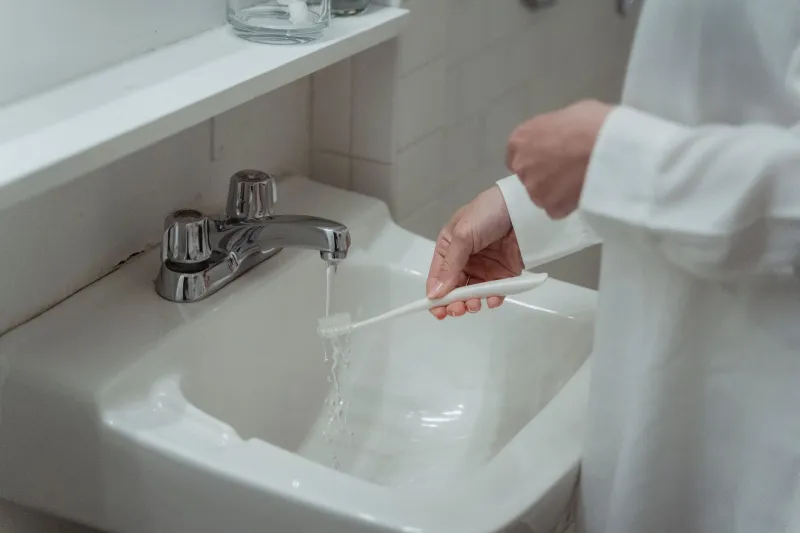
Use a soft, small-headed toothbrush. A single-tuft brush can be helpful for the very back of the mouth, but a normal soft brush will do if you angle it carefully. Sweep gently along the gumline around the tooth, including the back edge. Do not jab or force the brush under the flap. If you cannot reach comfortably, do not battle with it. Clean the rest of your mouth as normal and try again later with a smaller brush.
A warm saltwater rinse can be soothing: roughly half a teaspoon of salt in a glass of warm water, rinsed around the area and spat out. Do not swallow it. Some dentists suggest a soft syringe to flush food debris from under the flap, but ask your dentist or pharmacist before trying that, and never use anything sharp.
If your dentist has recommended a chlorhexidine mouthwash for a short period, follow their instructions. It is not a long-term everyday product, and it can stain teeth with prolonged use.
A sensible pain plan for tonight
For mild discomfort, a simple painkiller may take the edge off. Paracetamol or ibuprofen can be appropriate for some people, but check the packet and speak to a pharmacist if you are unsure, pregnant, breastfeeding, taking other medicines or have a health condition. Do not put aspirin directly on the gum — it can burn the tissue.
Food-wise, go soft and cool for a day or two: yoghurt, soup, mashed potato, scrambled egg, pasta that is not scalding. Avoid very crunchy, hard or spicy food that presses on the area. Keep drinking water. If you smoke, try to give the area a break — smoking makes gum inflammation worse and slows healing.
Do not prod the gum with a toothpick, fingernail or any sharp object. Do not use undiluted essential oils on the gum. And if the pain is escalating despite simple measures, that is information worth acting on rather than enduring.
The red flags worth acting on
Most gum irritation around a wisdom tooth can wait for a routine dental appointment. Some situations should not wait. Contact your dental practice urgently, or NHS 111 if they are closed, if you have:
- swelling that is spreading towards your eye, cheek or neck
- a fever, feeling generally unwell or shaking
- difficulty swallowing, or any difficulty breathing
- pus or a foul discharge from the area
- severe pain that is not controlled by ordinary pain relief
- a jaw that is locking or very difficult to open
If you have difficulty breathing or swallowing, get emergency help — call 999. Do not drive yourself to A&E with a rapidly spreading facial swelling.
If you are pregnant, immunosuppressed, have diabetes or have had recent facial surgery, lower your threshold for seeking advice. NHS 111 can direct you to out-of-hours dental services in your area.
What the dentist may do
At an appointment, a dentist will look at the tooth and the gum flap, and may take an X-ray to see how the tooth is sitting. They might clean under the flap, give advice on home cleaning, and prescribe antibiotics only if there are signs of a spreading infection — antibiotics are not a fix for a mechanical problem, and they are not given for simple tenderness alone.
If the tooth is causing repeated trouble, or is unlikely to come through usefully, extraction may be discussed. Some wisdom teeth are straightforward; others need a referral to a specialist oral surgery service. NHS dental charges vary across the UK, so ask your practice what applies to you before treatment.
While you are waiting
Keep the area gently clean, use saltwater rinses if they soothe you, eat soft food, stay hydrated and note what makes it better or worse. If the same spot flares up every few weeks, tell your dentist — a pattern of recurring pericoronitis is useful information when deciding what to do next.
A half-through wisdom tooth is a common little nuisance with a fairly predictable set of warning signs. Look after the gum calmly, respect the red flags and get advice when you need it. Your gums do not need heroics — just a steady hand and a sensible plan.