Away Days, Happy Gums: Building a Tiny Kit That Actually Gets Used

Photo: small travel toiletry bag with toothbrush and interdental brushes on bathroom counter, via img.freepik.com
Most of us have a bathroom shelf that quietly does the work: brush here, interdental brushes there, toothpaste with fluoride, maybe a little pot of something. Then you zip a bag and leave, and the whole system vanishes. Gum care doesn't need to be elaborate when you're away. It does need to be small, sturdy and obvious enough that you'll actually use it.
This isn't about packing a portable dental surgery. It's about giving your gums a fair chance when the sink is unfamiliar, the morning is rushed and the last thing you want to do is rummage through a washbag at 11pm.
Start with the bag, not the bathroom
The best travel kit is the one that survives real life. A small, wipeable pouch — the sort you'd use for cables or makeup — works well. Keep it packed between trips so you're not rebuilding it every time. If you're flying with hand luggage, remember the usual 100ml liquid rule for pastes and rinses; solid toothpaste tabs are an option if you want to avoid the plastic bag dance, though a normal fluoride toothpaste is still the simplest choice for most people.
Think of the kit as a tiny version of your home routine, not a replacement for it. Two brushes if you're away for more than a few days — one for the bag, one for the hotel room — saves the classic 'left it in the bathroom' moment.
The five-piece kit that covers the basics
You don't need much. A soft-bristled toothbrush with a cap, a fluoride toothpaste you like the taste of, interdental brushes or floss picks in the size you normally use, and a small mirror if you're likely to be sharing a bathroom. Add sugar-free chewing gum if it helps you freshen up after lunch, but don't treat it as a substitute for cleaning.
A tiny bottle of alcohol-free mouthwash is optional. It can be handy after a long journey, but it isn't the main event. If you use a mouthwash, keep it separate from brushing time — most guidance suggests not rinsing straight after brushing, so the fluoride stays on your teeth. Spit, don't rinse, is a decent rule wherever you are.
One thing you can leave behind: the guilt about not doing a ten-step routine. Two minutes of gentle brushing and a quick clean between the teeth is a solid away-day effort.
Brushing when the sink isn't yours
Hotel bathrooms, family bathrooms and campsite taps all have one thing in common: they're not set up for you. That's fine. Stand in the same spot each time if you can, even if it's a slightly awkward lean over a small basin. Keep your kit together so you're not hunting for a brush while someone else is waiting for the shower.
If you normally use an electric toothbrush, a manual brush for a few days is not a disaster. Use light pressure and small circular movements, paying attention to the gumline rather than scrubbing hard. If you're sharing a bathroom, a brush cap is worth its weight in gold. And if you're somewhere with no sink — camping, a long train journey, a festival — a dry brush and a tiny amount of toothpaste, followed by a swig of water and a spit into a tissue, is better than skipping it altogether. Not glamorous, but practical.
Interdental cleaning without the faff
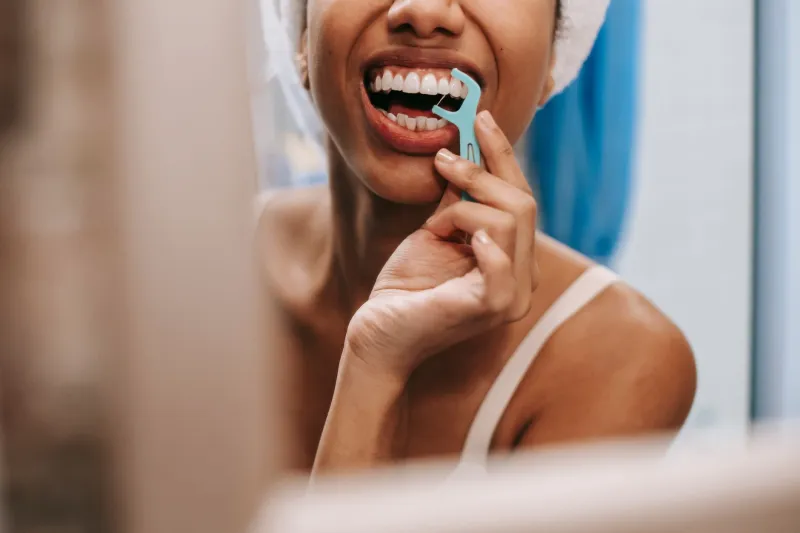
This is the bit people drop first when they're away. Interdental brushes or floss picks take seconds, though, and they're easy to carry. Put them next to your toothbrush so you see them. If you usually clean between your teeth in the evening, keep that slot even if the time shifts. A quick pass between the teeth before bed is more useful than a heroic deep clean on the last morning.
If you wear a retainer or aligner, add a small case and a brush for it. Your gums are already adjusting to something in your mouth; don't make them negotiate with a stray retainer wrapped in a napkin.
If your gums complain while you're away
A little tenderness or pink when you spit can happen when your routine changes, especially if you're eating differently, sleeping badly or brushing more vigorously because you feel rushed. Don't stop cleaning — that usually makes things worse. Go gentler, keep brushing twice a day with fluoride toothpaste, and keep cleaning between the teeth as comfortably as you can.
A saltwater rinse — a teaspoon of salt in a mug of warm water — can be soothing if your gums feel irritated, but it isn't a fix for an infection. If you notice swelling, a bad taste, pain that keeps you awake or bleeding that doesn't settle after a week or so, get it looked at. If you're away from home, a local NHS dentist or your own practice can advise; don't wait until you're back if something is clearly getting worse.
The come-home reset
When you unpack, don't just shove the kit back in a cupboard. Restock it, replace anything that's run out and give your gums a week of your normal routine before you decide anything has changed for the worse. Travel is a disruption, not a diagnosis. A small kit, a bit of flexibility and a gentle hand are usually enough to keep things on an even keel until you're back at your own sink.