Your Gums Are Talking — Ten Signals Worth Listening To (and How to Tell If It's Urgent)
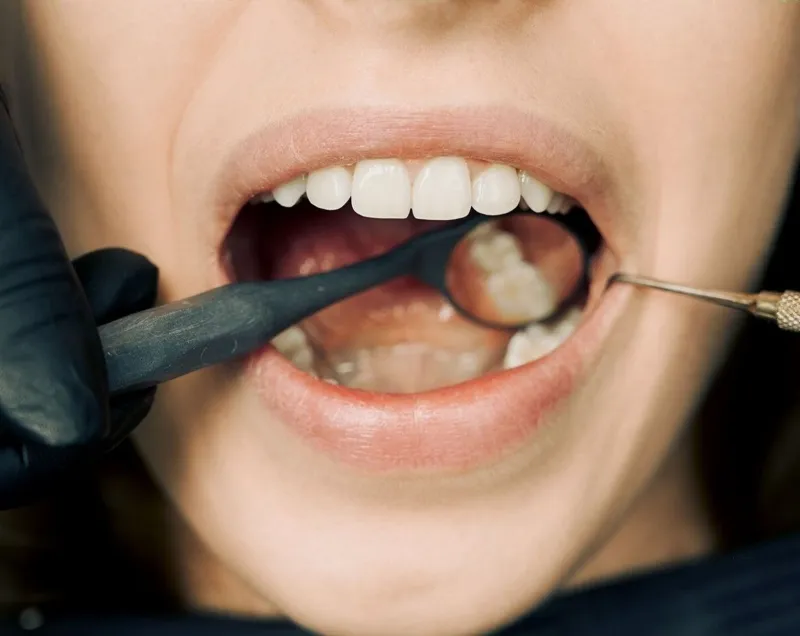
There is a particular kind of mirror inspection most of us do late at night: lean in, pull the lip down, squint, decide it is probably fine, go to bed. This piece is for anyone who has done that recently.
Gums are rarely dramatic. They do not usually shout — they send postcards. A bit of pink on the toothbrush. A taste that will not shift. A tooth that suddenly feels a fraction less solid than it did last month. Most of the time the message is 'early gum trouble, very fixable'. Occasionally it is 'get this looked at this week'. The skill is telling one from the other.
Nothing below replaces a dentist actually looking in your mouth, but a bit of knowledge makes that appointment — and that phone call — a lot less daunting.
What healthy gums actually look like
Firm, snug against the tooth, and quiet. They should not bleed when you brush or clean between your teeth, and they should not ache.
One important caveat on colour: the textbook phrase is 'coral pink', but that textbook was largely written with white skin in mind. If your gums are naturally brown or black-toned, that is normal for you. What matters is a change from your own baseline, not a shade on a poster.
Gums also react to hormones, medicines and illness — pregnancy, the menopause, blood pressure tablets, blood thinners, a dry mouth, a run of poor sleep. And smoking narrows the blood vessels, so gums can look deceptively calm while trouble carries on quietly underneath. If you smoke, treat a lack of bleeding as less reassuring than it seems.
The ten signals
1. Blood on the brush. The classic. It usually means plaque has been sitting along the gum line and the tissue is inflamed. This is gingivitis, and it is reversible.
2. Gums that look puffy, shiny or swollen. Inflammation makes tissue swell and lose its stippled, orange-peel texture. Compare one side with the other.
3. A metallic or sour taste that lingers. Often a sign of bacteria building up in pockets or between teeth, sometimes alongside a small amount of pus you cannot see.
4. Tenderness or an itchy feeling. Gums that feel bruised when you brush, or that you catch yourself pressing, are usually inflamed rather than injured.
5. Teeth that look longer. Recession. The gum has moved down the root, exposing a yellower, more sensitive surface — common with hard brushing, grinding, and with gum disease.
6. A sharp twinge at the gum line. Sensitivity right where tooth meets gum often follows recession or a worn area at the neck of the tooth.
7. Bad breath that survives brushing. Everyone has morning breath. Breath that stays sour through the day, or that others notice, points towards gum inflammation, a coated tongue or a pocket holding bacteria.
8. Food catching between teeth, or a new gap. Teeth drifting apart, or a sudden 'black triangle' where the gum used to fill the space, can signal lost support.
9. A tooth that feels loose or has shifted. In an adult, this is the one to take seriously. It usually means bone support has been affected.
10. A small bump or 'boil' on the gum. A tender pimple that comes and goes, sometimes with a bad taste, often marks an infection at the tip of a tooth root. It may drain and settle — it does not fix itself.
Green, amber, red
Green — keep an eye on it, mention it at your next check-up
A one-off trace of blood the first few times you start cleaning between your teeth. Mild tenderness after a rough brushing day or a new toothbrush. Slight sensitivity after a cold or a few nights of broken sleep.
Keep cleaning gently and consistently. If it has not settled in two weeks, move up to amber.
Amber — book an appointment, don't wait for the reminder text
Bleeding most days for more than a fortnight. Breath that stays unpleasant despite good cleaning. Recession you can see in the mirror. A tender patch with no obvious cause. A bad taste that keeps coming back.
None of this is an emergency, but it is also not something to park for a year. Aim to be seen within a few weeks.
Red — get seen quickly
Bleeding that starts on its own. A loose adult tooth. Swelling in the gum or the face, pus, fever, or feeling generally unwell. Pain that wakes you at night. Any swelling spreading towards the eye or under the jaw, or difficulty swallowing or opening your mouth — treat that as same-day territory. If you cannot reach a dentist, call NHS 111 (or NHS 24 on 111 in Scotland); for swelling affecting your breathing or swallowing, go to A&E.
If an NHS appointment feels impossible
Start with the NHS website's 'find a dentist' tool and ring around — practices with NHS capacity often release slots first thing in the morning. Ask to go on a waiting list, and ask again in a few weeks. NHS 111 can point you towards urgent dental services if you are in pain and not registered anywhere. Charges and access differ across England, Scotland, Wales and Northern Ireland, so check your nation's NHS site rather than assuming.
Two practical things worth knowing. First, in England the NHS system is banded — band one covers an examination, a diagnosis and a written plan, so you are not committing to a big bill just by being looked at. Second, many practices let you see a dental hygienist directly without seeing a dentist first, which is often the quickest and cheapest route to a clean and some honest advice. It is always fine to ask what something will cost before you agree to it.
What to say when you ring
Keep it short and specific. Something like: 'Hello — I'm not registered with you. Do you have any NHS spaces? I've had bleeding gums for about three weeks and I'd like a check-up.' If you are in pain: 'I've got pain in my upper left, it's keeping me awake and there's some swelling. Do you have an urgent slot today?'
Then ask: 'Can you tell me which NHS band this would come under?' and 'Could I see the hygienist directly?' Jot down roughly when your symptoms started — it genuinely helps.
The short version
Most gum signals are early, common and treatable. The mistake isn't having them; it's assuming they'll sort themselves out. Two weeks of noticing, one phone call, and you'll know exactly where you stand.