Between the Teeth: A Straight-Talking Guide to Floss, Sticks, Brushes and Water Flossers
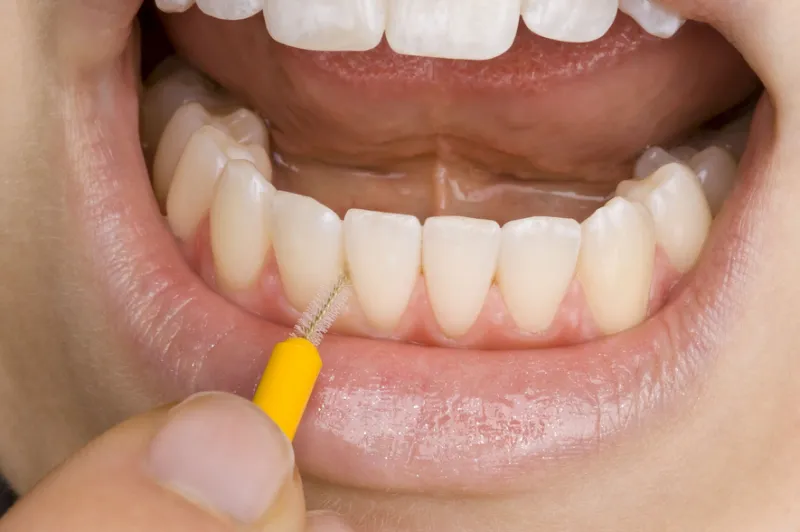
Photo: Clairemeaker, CC BY-SA 4.0, via Wikimedia Commons
Walk down any supermarket oral care aisle in the UK and you'll be confronted with a wall of plastic: floss in mint, floss in charcoal, bendy sticks, tiny bottle brushes in eight colours, and a water flosser box with a picture of someone grinning at a sink. It's a lot. And most of it works — just not all of it works for your mouth.
This isn't a lecture about flossing daily or else. It's a buying guide. Here's what each tool is genuinely good at, roughly what it costs to keep going, and how to work out which one suits the gaps you've actually got.
Why the gaps get so much attention
A toothbrush is a brilliant bit of kit, but it can only reach the flat faces of your teeth. The sides that touch each other — and the bit of gum just below where they meet — are largely out of reach. That's precisely where plaque likes to settle and where gum inflammation often begins.
The encouraging part: this is a mechanical problem with a mechanical solution. You don't need a special rinse or a supplement. You need something that physically disrupts the plaque in those gaps, done reasonably often. Which tool you use matters far less than whether it happens.
The five options on UK shelves
String floss
Still the cheapest thing in the aisle. Waxed, unwaxed, ribbon, expanding — the differences are mostly about comfort rather than cleaning power. It's the go-to for very tight contacts where nothing else will pass through.
Cost: a couple of pounds for a 50m dispenser that lasts months. Genuinely pennies per week.
Downside: technique-dependent, fiddly, and the reason a lot of people quietly gave up in their twenties.
Flossettes and floss picks
A short stretch of floss on a plastic handle. Brilliant for people who find string floss awkward, for using in front of the telly, and for kids learning the habit with supervision.
Cost: roughly £3–£6 for a bag of 30–50, so noticeably pricier per use than a dispenser of floss.
Downside: the floss is often under more tension than you'd hold it yourself, so it can feel harsh on tender gums. Single-use plastic, too.
Interdental brushes
The little bottle brushes. These are, for most adults with any gap at all between their teeth, the most effective option going — and the one most hygienists reach for first.
Sizing: they come in colour-coded sizes, and the colour systems are not identical between brands. Get sized once by a dentist or hygienist and note the brand and colour down. A correctly sized brush passes through with slight resistance and touches both teeth; if it drops through with no feedback, it's too small.
Cost: a pack of six to eight is usually £4–£7. Most people use one brush for several days to a week before it frays, which works out at somewhere around 30–70p a week.
Downside: useless if your teeth are tightly packed, and they can be awkward around the back of the last molars.
Water flossers (oral irrigators)
A pump that fires a pulsating jet of water between the teeth and along the gumline. Not a replacement for a brush in the gap, but genuinely useful — particularly around braces, bridges and implants, where threads and brushes struggle to reach.
Cost: £30–£70 for a decent countertop or cordless model, then just water and the occasional replacement jet tip. No ongoing consumable cost to speak of.
Downside: bulky, noisy, needs a plug or charging, and the cheap ones have weak pumps that make the whole exercise pointless. Also splashy until you get the hang of it.
Soft picks and wooden sticks
The rubbery toothpick-style picks and the little triangular wooden sticks you sometimes see in restaurants. Handy as a top-up when you're out, and gentle on gums that are sore, but not usually thorough enough to be your only between-teeth method.
Cost: minimal.
Matching the tool to the mouth
- Tight contacts, no visible gaps: floss or fine flossettes. Consider asking whether your contacts are genuinely closed or whether you've got a small gap that a slim interdental brush could manage.
- Fixed braces: interdental brushes for the gaps plus a water flosser for around brackets. Superfloss for the wire.
- A bridge: superfloss threaded under the false tooth, or a water flosser aimed underneath. This is one of the few situations where an irrigator is close to essential.
- Implants: interdental brushes are the priority; a water flosser is a helpful extra. Implant gum problems can be quiet until they're not, so don't skip this.
- Receding or sensitive gums: go a size smaller and be gentler. Soreness that lasts more than a few days with a correctly sized brush is worth mentioning to a professional.
- Arthritic hands or limited dexterity: flossettes, an electric flosser, or interdental brushes with a longer handle. There's no prize for struggling.
Technique, briefly
With floss, curve it into a C shape around each tooth rather than snapping it straight down onto the gum. With interdental brushes, insert at a slight angle and push through once or twice — don't scrub back and forth like you're cleaning a grill pan. Once a day is the target, ideally in the evening before you brush, so the fluoride toothpaste gets into the cleaned gaps afterwards.
A little bleeding in the first week or two of a new habit is common and usually settles. Bleeding that carries on, or that appears on its own, is a different conversation — worth having with a dentist rather than ignoring.
What you can safely skip
Charcoal-infused floss, subscription boxes that arrive faster than you can use them, and anything promising to 'detox' your gums. Mouthwash is not a substitute for cleaning between the teeth; it's a nice-to-have at best.
The only real answer
The best between-teeth tool is the one that fits your mouth without hurting and that you'll still be reaching for in six months. If that's a water flosser because floss makes you want to cry, use the water flosser. If it's a green interdental brush your hygienist picked out, buy the green ones. Perfection is not on the shelf, but consistency very much is.